Braided vs PVC AV Cables: Which Is Better for Residential & Commercial Use?
Introduction
When you're putting together an audio and video system—whether it's for a home, an office, a retail space, or a full commercial AV installation—cable selection is one of those details that's easy to overlook.
Most buyers focus on signal quality alone, but the outer jacket of an AV cable plays just as big a role in durability, flexibility, and long-term performance.
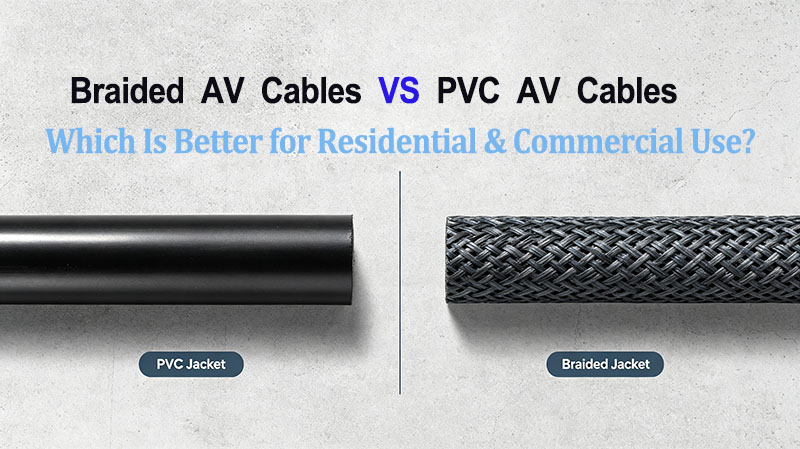
Braided and PVC jackets are two of the most common options for AV cables, and each one shines in different environments. Understanding how they differ will help you choose the right cable for your next residential
or commercial project.
What Is a PVC AV Cable Jacket?
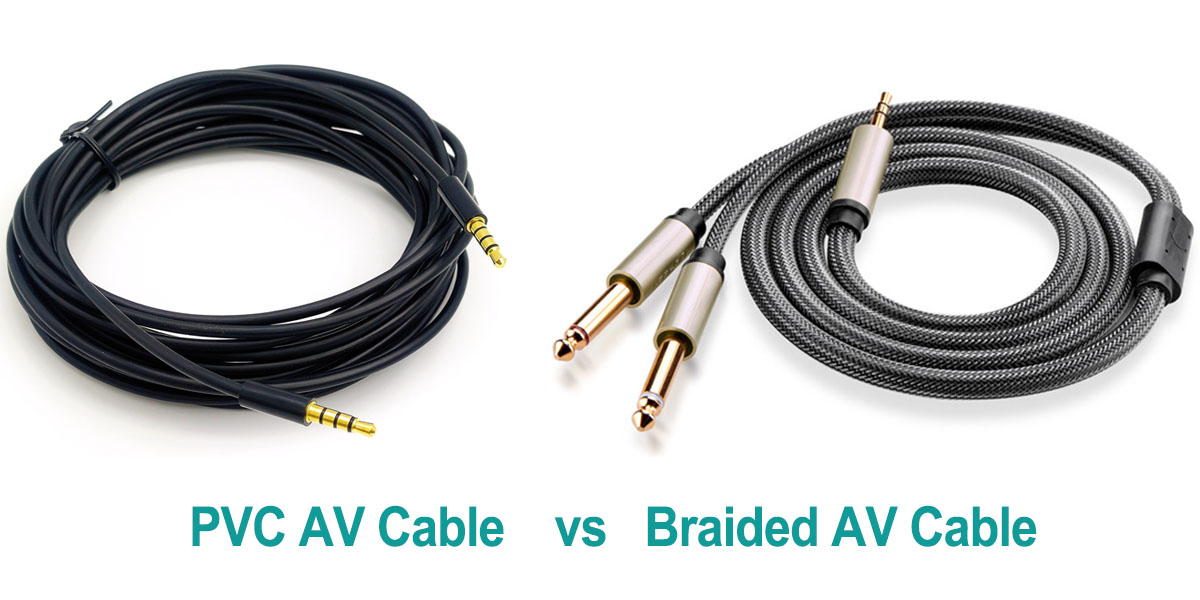
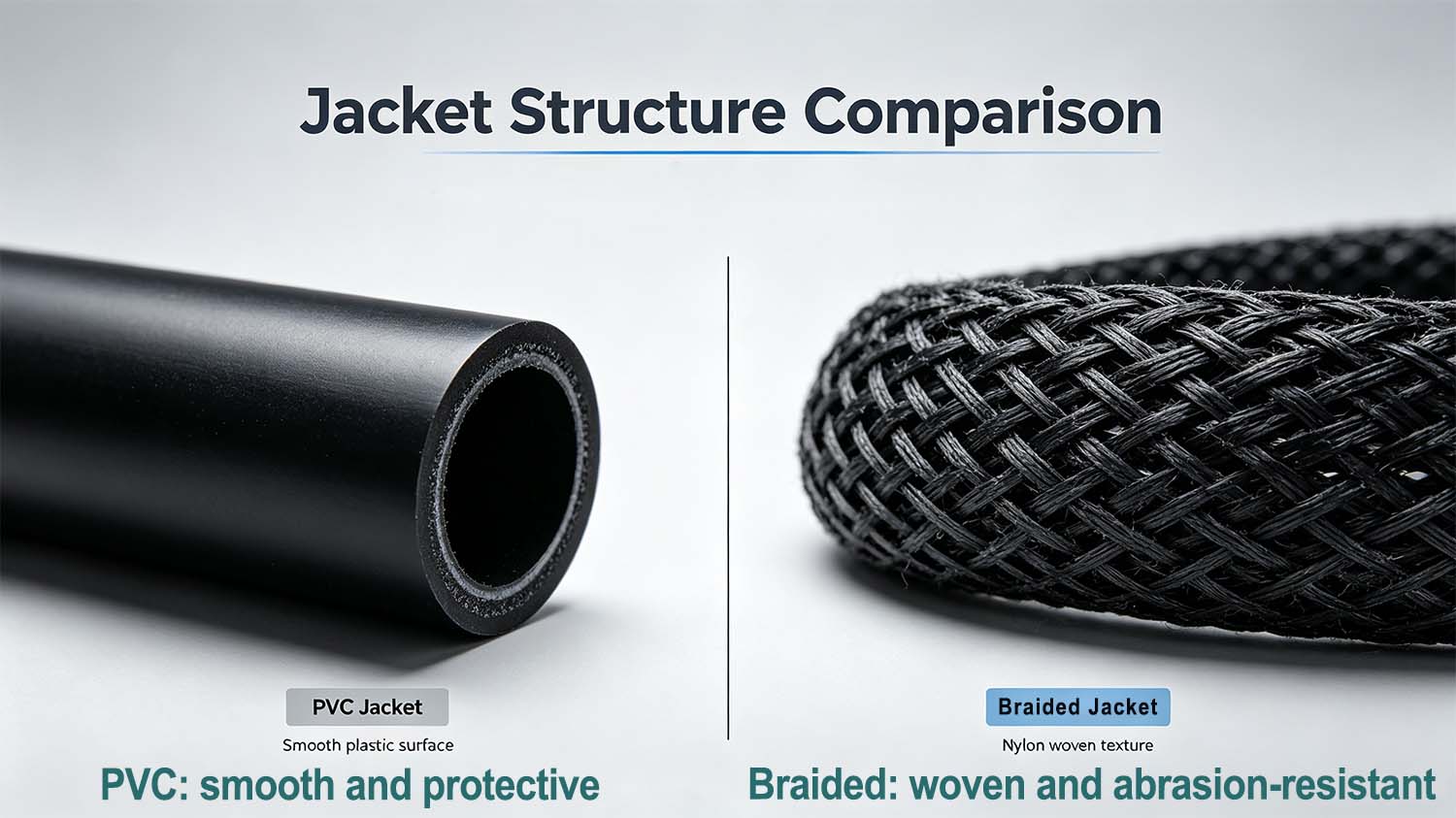
PVC, or polyvinyl chloride, is the traditional thermoplastic material that's been used for AV cable insulation for decades. A PVC jacket has a smooth, solid outer layer that protects the internal conductors from minor scratches, dust, and light moisture.
PVC cables are a great fit for basic indoor residential applications. They're cost-effective, lightweight, and easy to produce, which makes them a budget-friendly choice for home theater setups, bedroom TV connections,
or fixed indoor wiring hidden inside walls or cable trays. The rigid jacket holds its shape well when routed neatly and needs very little maintenance in low-traffic areas.
That said, PVC has clear limitations when it comes to heavy commercial use. It becomes stiff in cold temperatures and can crack if it's repeatedly bent or twisted. Under constant friction, sharp edges, or high foot traffic,
the outer skin can wear down quickly. Standard PVC also releases toxic smoke when burned, which means it may not meet fire safety codes for commercial buildings, hospitals, or shopping malls.
What Is a Braided AV Cable Jacket?
Braided cables feature a woven protective sleeve—usually made from nylon or polyester threads—wrapped over the inner insulation. Some braided designs combine the woven outer layer with a TPU or PVC base for extra protection.
The biggest strength of braided AV cables is their outstanding mechanical resistance. The woven outer shell resists abrasion, tearing, and fraying, even with frequent plugging, moving, and bending. That makes braided cables ideal for high-traffic commercial scenarios: conference rooms, stage audio setups, retail display screens, and portable AV equipment that gets packed and transported regularly.
Braided jackets also offer better flexibility. They bend smoothly without kinking, and the braid helps reduce tangling during installation. From an aesthetic standpoint, the textured woven look is a popular choice for visible cable runs in modern home entertainment rooms, co-working spaces, and showrooms.
The downsides of braided cables are higher cost and less protection against liquid spills compared to solid polymer jackets. The gaps between woven threads allow dust and liquids to seep through if there's no sealed inner layer. Braided sleeves can also catch on sharp corners during cable routing.
Braided vs PVC AV Cables: Side-by-Side Comparison
| Feature | PVC AV Cable | Braided AV Cable |
| Durability |
Good for static indoor use; prone to cracking with repeated bending |
Excellent abrasion resistance, anti-fray, withstands frequent movement |
|
Flexibility |
Stiff at low temperatures; easy to kink |
Highly flexible, tangle-resistant |
|
Cost |
Lower price point |
Higher material and manufacturing cost |
|
Appearance |
Plain smooth surface |
Premium textured woven look |
|
Best Scenarios |
Permanent hidden residential wiring, low-traffic indoor installations |
Commercial movable AV gear, visible home theater cables, stage & conference use |
How to Choose AV Cables for Residential vs Commercial Use
For residential projects where cables run behind walls, under carpets, or stay fixed in place, PVC AV cables deliver reliable performance at a lower budget. If local building codes require fire safety compliance, stick with flame-retardant PVC options.
For commercial environments—or home setups where cables remain exposed and get reconnected often—braided AV cables are the better investment. Their tough outer weave prevents premature damage and extends service life, which reduces replacement costs over time.
In many mixed-use projects, installers combine both types: PVC for permanent concealed wiring and braided cables for exposed, movable connections.The right choice always comes down to your site conditions, safety requirements,and budget.
Finding the Right AV Cable Jacket for Your Project
Whether you need standard PVC AV cables or custom braided audio/video cables for bulk residential or commercial orders, our lineup covers different lengths, connector types, and jacket specifications to match your project needs.
HDMI 2.1 vs Display Port 2.1: Which Cable Is Best for PC & Console Gaming?
Related Article