Distinguish These Audio Connectors:TRS vs TS vs RCA vs XLR
Introduction
According to the type of signal transmitted, audio connector can be divided into analog connector and digital connector.Different from video, analog connector occupy
a large proportion in the audio field,among which the common ones are TRS interface,TS interface,XLR interface and RCA interface.
TRS interface
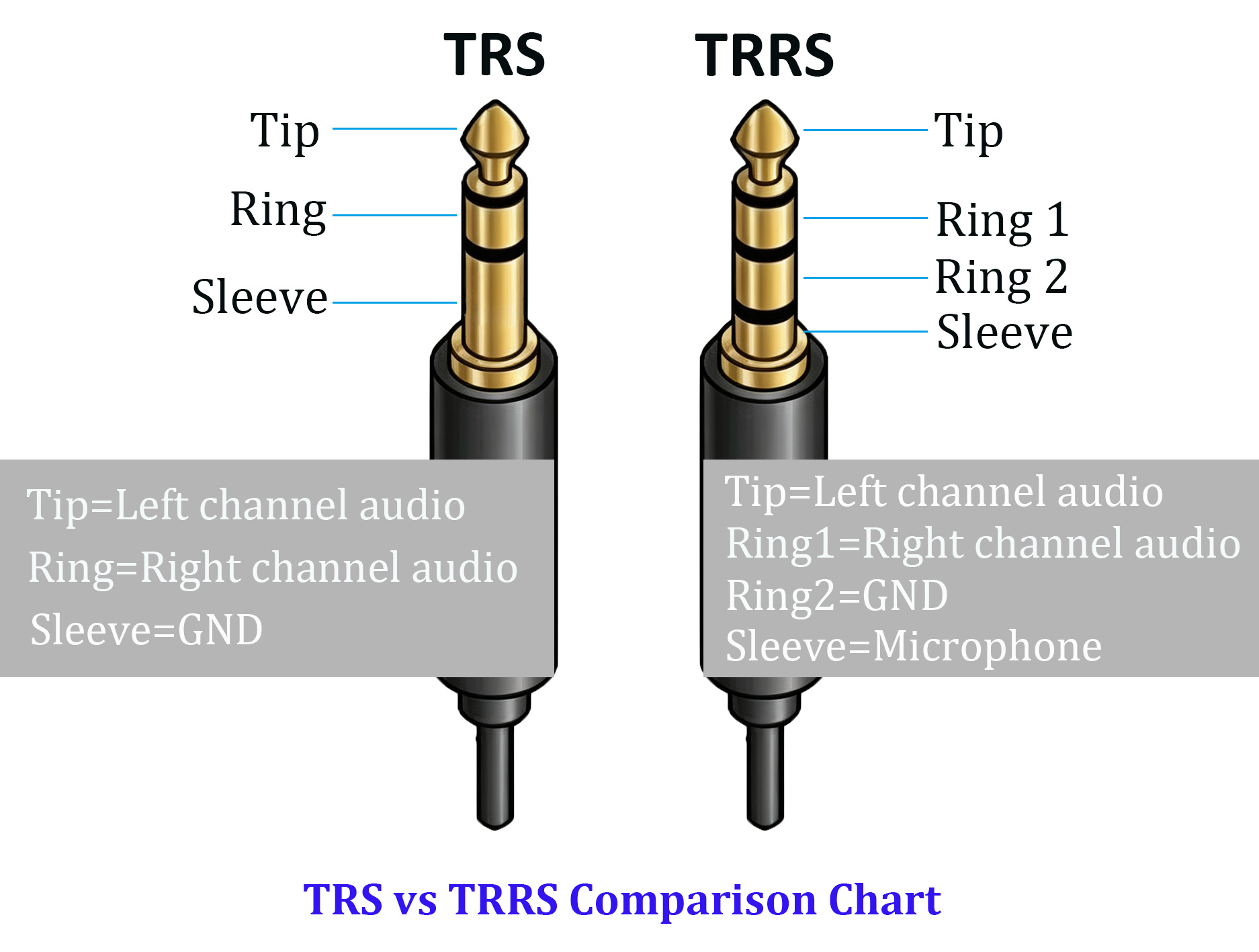
TRS is the abbreviation of the English initials of the three contacts in the audio connector:Tip (Tip)-Ring (Ring)-Sleeve (Sleeve), which represents a three-stage plug
structure (two insulated black rings can be seen in the appearance), Used to transmit analog audio signals.
The metal part of the plug is divided into 3 sections:
There are three common sizes of TRS:
1.2.5mm:Usually used on some old-fashioned portable devices in the past, it is no longer common;
2.3.5mm:Commonly known as "small three-core",commonly used in consumer devices (such as computers and mobile phones);
3.6.35mm:Commonly known as "big three cores",it is mainly used for mainstream interfaces of professional equipment.
The number of ring(R):
In addition to the size difference,there is also the number of rings (R). In daily use,we generally refer to these joints as TS, TRS,TRRS,etc,according to the specific number of rings.
Taking TRS as an example,T, R, and S correspond to three parts respectively.Generally speaking,T=left channel L,R=right channel R,and S=ground wire GND.The black in the
middle is used as an insulating ring.Divided into three "cores".The TRRS has one more ring than the TRS, with a total of four "cores", which can be used to transmit microphone
signals (transmission according to the CTIA standard),and many 3.5 mm headphone cables used to connect mobile phones and PCs are TRRS.
TRS vs TS:
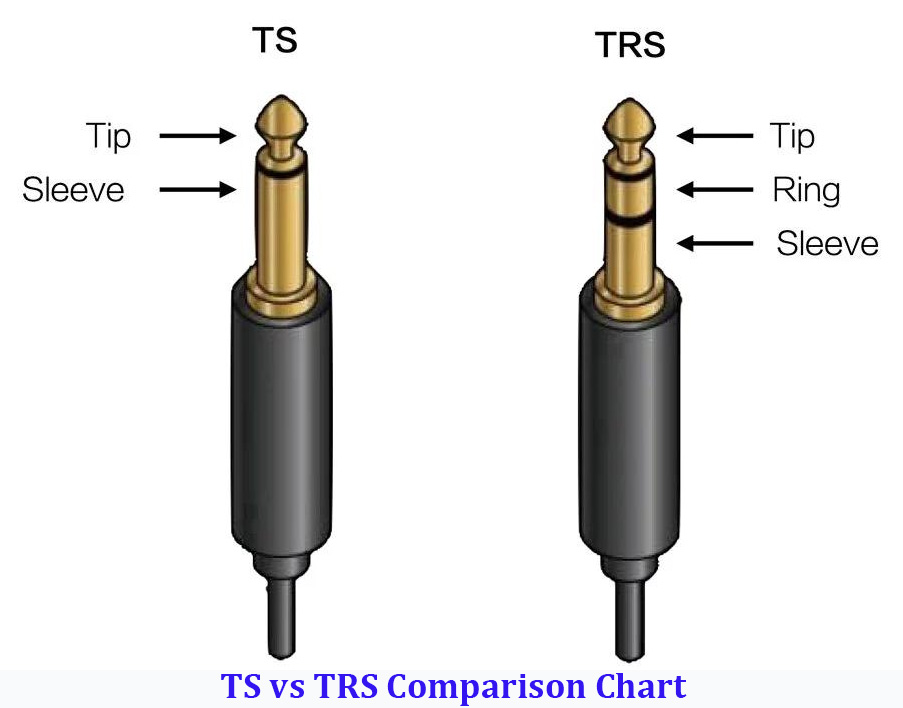
TS = Tip Sleeve,commonly known as sophomore core.It has only 2 pieces of metal contacts,1 insulating ring,Tip (Tip) = audio signal Hot,Sleeve (Sleeve) = ground/shielding layer.
The TS interface has only two wires,is always unbalanced,mono,cannot transmit stereo,and cannot do balanced signals.Its most common size is a 6.35 mm (1/4 inch) large
sophomore core,and there is also a rare 3.5 mm TS small sophomore core. Although the appearance is the same as the 6.35 TRS large three-core outer diameter,it can be TRS
socket, but the electrical function is completely different.
RCA interface
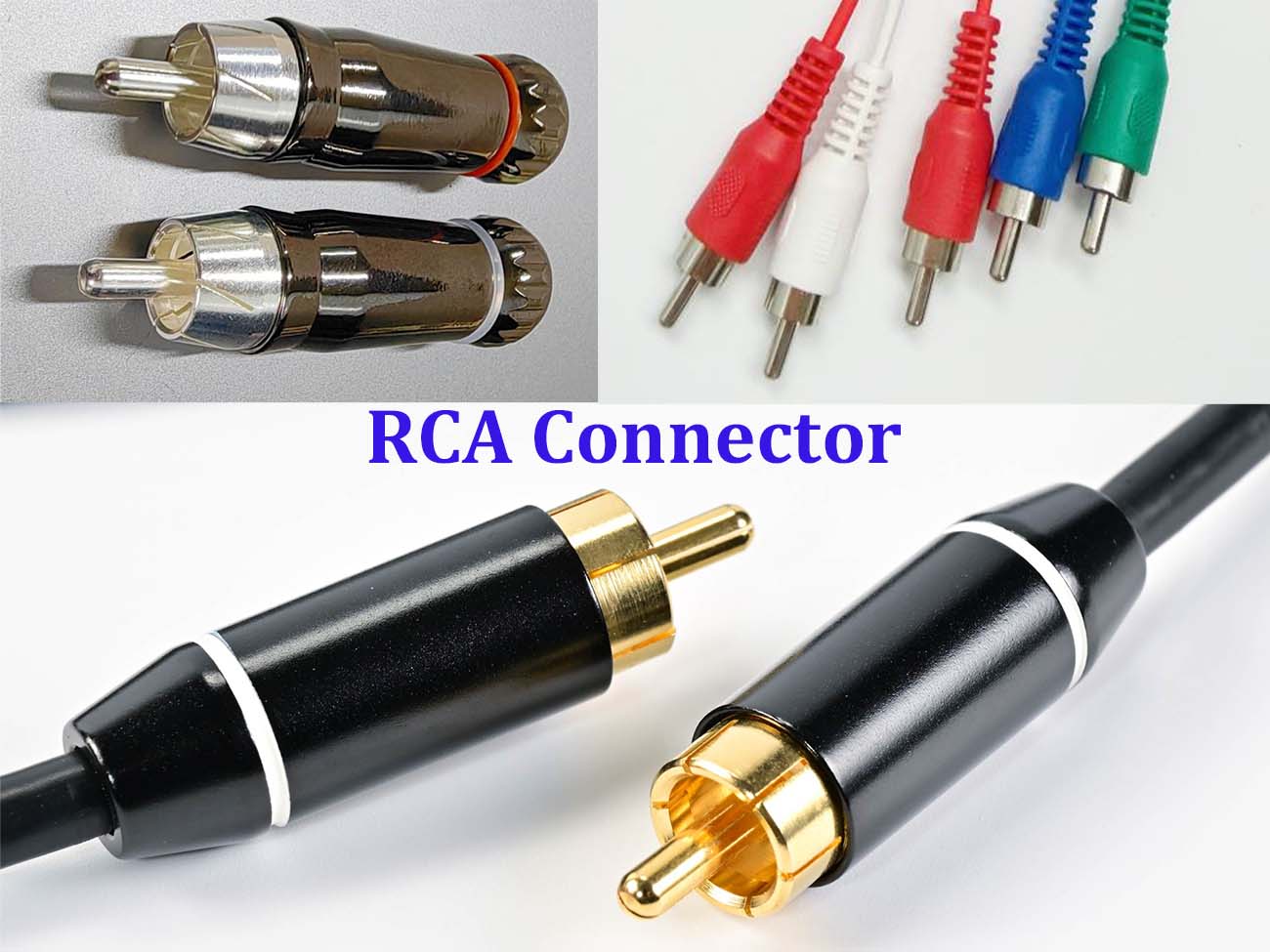
Is another more common interface in audio/video cables.RCA is its short name, and the full name is Radio Corporation of America,named after the invention company (American Radio Company)
launched in the 1940s.What we are more familiar with is its other name-"Lotus Head",which is named because the structure of the center pin and outer ring of the plug looks like a lotus flower.
The RCA interface adopts coaxial signal transmission,the central axis is used to transmit the signal,and the central metal needle = signal line;The layer with one ring on the outer edge is used
for grounding,the metal sleeve of the outer ring = ground wire/shield layer, and each cable is responsible for transmitting an audio signal of a channel.The difference from TRS is:one TRS plug
can achieve stereo sound,while one RCA will always only have mono.If you want two-channel stereo sound, you must use two RCA in pairs.
XLR Interface
The last is the XLR interface,XLR = Cannon X Series,Latch Latch,Rubber insulation,commonly known as Cannon head,professional audio standard balanced interface,the most commonly
used 3-pin version.XLR interface is famous for its metal shell,spring lock structure and strong anti-interference ability, and is often used in audio, mixer and other equipment.
- Pin1 = GND ground wire/shield layer
- Pin2 = Hot (signal +, Hot end)
- Pin3 = Cold (signal, Cold end)
✔ Built-in spring buckle, inserted and locked, not easy to be torn off; Distinguish (needle), female head (hole)
✔ 1 3-pin XLR can only transmit 1 mono balanced signal, and stereo requires two XLR cables
✔ Can transmit 48V phantom power supply to power capacitive microphones (TRS cannot provide phantom power supply)
2.Balanced transmission core advantages
The transmitting end sends two audio signals of positive phase and reverse phase at the same time. The interference noise brought by the long line is in the same phase on the two
wires, and the noise cancels each other after subtraction at the receiving end. Long-distance wiring (tens of meters) has extremely low noise and the strongest anti-interference ability. It is
the first choice for stages and recording studios.
Comparison chart of TS/TRS/RCA/XLR four mainstream audio interfaces:
|
Connector |
Balanced /Unbalanced |
Channels per Cable |
Features |
Typical Applications |
|
TS 6.35 mm (1/4" TS Plug) |
Unbalanced |
Mono |
2-pole,no noise rejection |
Guitar and bass instrument cables |
|
TRS 6.35mm (1/4"TRS Plug) |
Balanced or Unbalanced |
Balanced Mono /Unbalanced Stereo |
3-pole,dual-function design. Cannot carry 48V phantom power |
Mixing consoles, professional monitor speakers |
|
RCA (Phono Connector) |
Unbalanced |
Mono |
Popular for home use,low-cost,prone to noise over long cables |
Hi-Fi amplifiers, DACs,set-top boxes |
|
3-Pin XLR |
Balanced |
Mono |
Latching lock, superior noise rejection, supports 48V phantom power |
Microphones,long-distance stage wiring, recording studios |
Conclusion:
TS sophomore core is an unbalanced mono interface, which is mainly used for guitar, bass and other musical instruments to connect speakers and effects.The TRS large three-core function is flexible,
and it can be used as a balanced mono line or an unbalanced stereo transmission. It is mostly used in mixers and professional monitoring equipment. RCA Lotus head is a non-balanced mono
interface, which is very common in household HiFi and power amplifier devices.The 3-pin XLR Canon is a professional balanced interface with outstanding anti-interference ability. It also supports
48V phantom power supply, which is suitable for long-distance audio transmission of microphones and stages.
Need Custom Cables or Connectors for Your Project?
We produce premium audio cable and audio connectors,customized lengths,and jacket materials are available to match your project requirements.Our engineering team can assist you in selecting
the optimal cable for your use case.Contact us for a technical consultation or custom quotation.
A Complete Guide to Video Cable Connector Types: How to Choose the Right Connector
PVC vs TPU Spiral Cable: Which Is Better for Outdoor Working Conditions?
Related Article