2.5mm, 3.5mm, 4.4mm, 6.35mm Audio Connectors: What Are The Differences & Which Delivers Better Sound Quality?
Introduction
If you are building an audio system, upgrading your headphone cable, or sourcing audio connectors, you have likely encountered four common audio plug sizes: 2.5mm, 3.5mm, 4.4mm and 6.35mm. Many audiophiles and buyers mistakenly believe that the physical size of the plug directly determines sound quality. However, the real difference lies not in diameter, but in whether the connector is built for single-ended or balanced audio transmission.
These four audio connectors fall into two core categories: single-ended connectors and balanced connectors.
Single-ended plugs: 3.5mm and 6.35mm
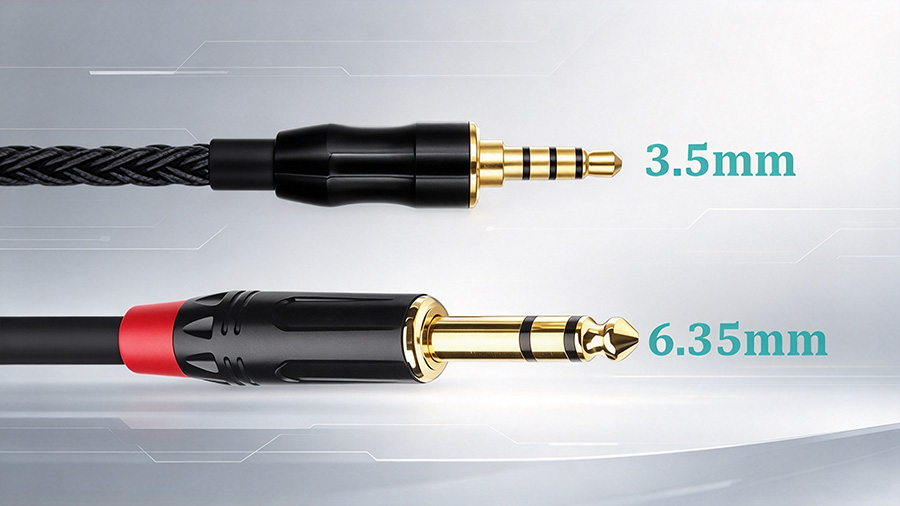
3.5mm TRS is the most familiar consumer audio jack, widely used on laptops, smartphones, portable music players and daily headphones. The larger 6.35mm (1/4 inch) connector is the standard for professional audio gear, including mixing consoles, studio monitors, headphone amplifiers and musical instruments.
Both 3.5mm and 6.35mm are single-ended designs. When using the same headphone and the same audio source, switching between a 3.5mm single-ended plug and a 6.35mm single-ended plug brings zero change to sound quality. The only gap is physical size, mechanical durability and application scenarios. The 6.35mm connector has a larger contact area, stronger structure and longer plug life, making it ideal for frequent use in recording studios and live stages.
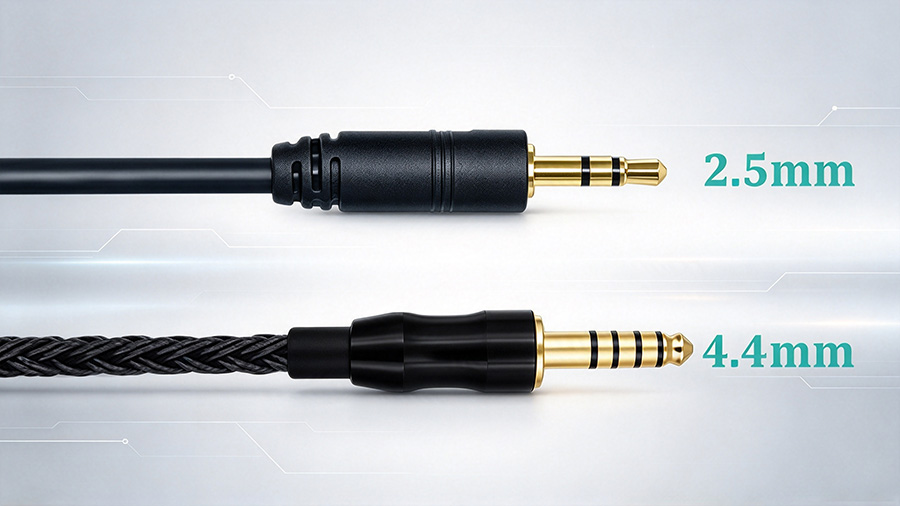
Balanced plugs: 2.5mm and 4.4mm
2.5mm and 4.4mm Pentaconn connectors are balanced audio interfaces. Just like the pair of single-ended connectors, swapping between a 2.5mm balanced plug and a 4.4mm balanced plug does not improve or degrade audio performance, assuming you use the identical headphone and balanced output on your player. The difference is merely the physical dimension of the plug.
The critical performance gap exists between balanced and single-ended connections. Leaving subjective listening impressions aside, balanced audio connectors have clear objective advantages. Balanced wiring provides stronger anti-interference capability and superior channel separation. For most audio players, the balanced output also delivers significantly higher power output than the single-ended port. More power means better control over high-impedance headphones, wider dynamic range and cleaner sound presentation.
With the same headphone, balanced connections generally offer better audio performance. The independent signal paths of balanced design help cancel electromagnetic noise, reduce crosstalk between left and right channels, and preserve audio details that single-ended circuits may lose. This benefit stands out for high-fidelity listening, studio monitoring and long cable runs.
It is important to note that the connector is only one piece of the whole audio chain. Even with a high-quality balanced plug, poor cable conductor material, flawed shielding or bad soldering will weaken audio performance. You cannot expect better sound just by replacing the plug alone.
Final Buying Guide
Do not chase larger or newer connector sizes blindly. If your audio device only has a single-ended output, 3.5mm or 6.35mm connectors are fully sufficient. If your player supports balanced output and you want to unlock the full potential of your high-end headphones, choose either 2.5mm or 4.4mm balanced plugs according to your device’s port specification.
As a professional manufacturer of audio cables and connectors, we supply custom single-ended and balanced audio plugs. All our audio connectors adopt high-purity copper contacts and reliable shell materials, supporting stable signal transmission for consumer HiFi and professional audio projects. If you need custom audio cable, feel free to contact our engineering team for support.
Straight vs Angled Guitar Cables: Which One Should You Choose?
Common Types of USB Connector: A Complete Buying Guide
Related Article