Straight vs Angled Guitar Cables: Which One Should You Choose?
Introduction
Many guitar players overlook instrument cables, thinking any cable will work. But picking the wrong cable can cause sudden cut-outs during gigs, unwanted noise in recordings, or dull-sounding high frequencies. One of the most common questions is: should you go for dual-straight plugs or one-straight and one-angled plug guitar cables? This article breaks down their differences, buying tips and common pitfalls.
1. Dual-Straight vs Straight-Angled: Key Differences & Use Cases
Structural Differences
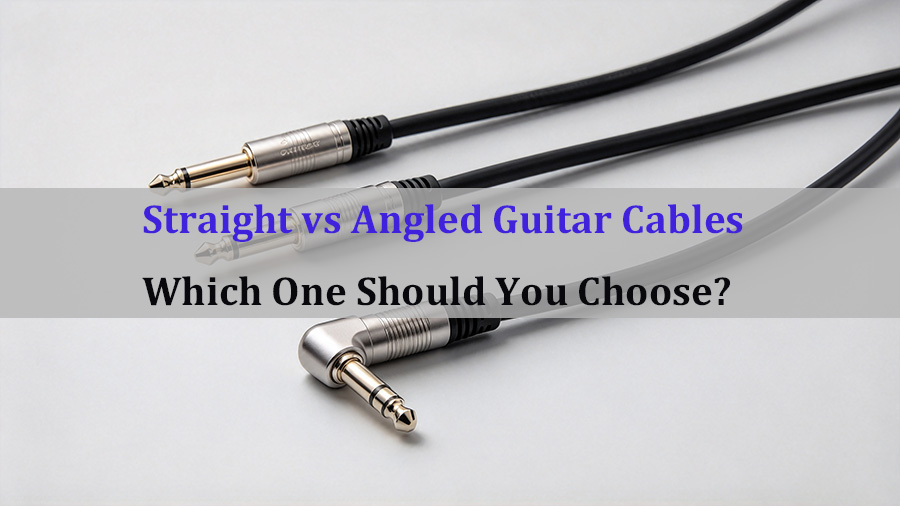
- Dual-straight cable: Both ends feature standard 6.35 mm straight TS plugs (e.g. Monster Cable Standard 100 series). Best for fixed setups such as connecting effect pedal boards to amplifiers.
- Straight-angled cable: One straight plug, one angled plug. Angled ends are commonly 90° or 45° (fits guitar output jacks), reducing sharp cable bending. Representative product: Fender Deluxe Series.
Real-world performance
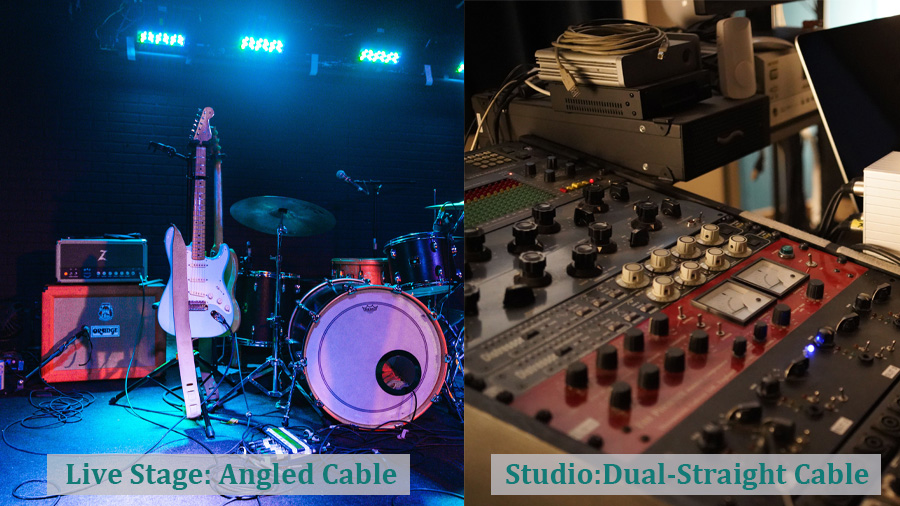
- Live stage performance: Straight-angled cable is preferred The angled plug reduces strain and pulling force on your guitar jack. According to Sweetwater lab tests, well-made angled cables deliver 30% longer plug-and-unplug service life, lowering risk of accidental disconnection while you move on stage.
- Studio recording: Dual-straight cable works better Dual-straight connections offer superior stability and lower contact resistance. Premium cables like Mogami Gold achieve contact resistance below 0.5 Ω, preserving your original tone details.
2. Beside Plug Shape — The Key is the Specifications of Cable
Plug geometry is only surface level. Internal construction defines tone quality and service life.
- Conductor Material Look for OFC (Oxygen-Free Copper) with purity ≥99.9%, such as Canare GS-6. Poor quality copper can create up to 3 dB high-frequency loss over 10 meters, resulting in dull, lifeless tone.
- Shielding Double-braided shielding (example: Klotz AC110) provides twice the noise rejection compared to single-layer aluminum foil shielding, blocking interference from stage lights and power supplies.
- Cable Length Guidelines
3-6 m: Straight-angled cables are convenient for rehearsal and small-size gigs.
Over 6 m: Signal attenuation occurs. Use dual-straight cables paired with an active DI box to compensate signal loss.
Special purpose recommendations
- High-gain tones: Dual-straight cables with gold-plated plugs (e.g. Evidence Audio SIS) minimize high-frequency phase distortion for cleaner tone.
- Les Paul & guitars with side-mounted output jacks: Straight-angled cables are highly recommended. Straight plugs will hang by gravity and easily trigger intermittent connection issues.
| Comparison Item | Dual-Straight Cable | Straight-Angled Cable |
| Plug Structure | Both ends 6.35 mm straight TS plug | One straight plug, one 90°/45° angled plug |
| Reference Products | Monster Cable Standard 100, Mogami 2524 | Fender Deluxe Series, Fender Performance series |
| Best-fit Scenarios | Studio recording, fixed connection between pedalboard and amplifier | Live gigs, rehearsal, Les Paul & side-jack guitars |
| Contact Performance | Lower contact resistance, stable signal transmission | Reduces strain on guitar jack, 30% longer service life for plugging |
| Drawbacks | Cable weight may pull guitar jack when plugged directly into guitar | Cheap models tend to break at bend point; choose versions with nylon strain relief |
| Length Recommendation | Over 6 m, use with active DI box for signal compensation | 3-6 m for rehearsal & gig, easy to store and carry |
| Tone Suitability | High-gain tone; gold-plated plugs reduce phase distortion | General purpose for live performance, rock and various playing styles |
3. 3 Common Misconceptions Guitarists Should Avoid
Myth 1: More expensive plugs equal better sound
Guitar Player Magazine 2023 tests show that within 10 meters, the frequency response gap between $50 and $150 instrument cables is less than 0.5 dB. Prioritize conductor material over fancy plug plating for better value.
Myth 2: Angled plugs are always more durable
Not all angled cables are tough. Cheap low-end angled cables often fail at the bend point. Reliable angled cables add nylon strain-relief reinforcement, like the Planet Waves Circuit Breaker series.
Myth 3: Wireless systems can fully replace wired cables
Even premium wireless units have latency. The popular Line 6 G10 wireless system has around 2.3 ms latency, while wired cables produce only 0.1 ms delay. Professional recording studios still rely on wired instrument cables.
Final Buying Summary
- Home practice & live gigs: Straight-angled cable for easy handling and jack protection. Reference model: Fender Performance series.
- Pedalboard setups & studio recording: Dual-straight cable such as Mogami 2524 for stable connection and full tone retention.
- For runs longer than 6 meters, always use a signal booster to counteract signal drop-off.
Note: Plug style is for fitting your hardware. Conductor and shielding determine tone and durability — do not put form over function.
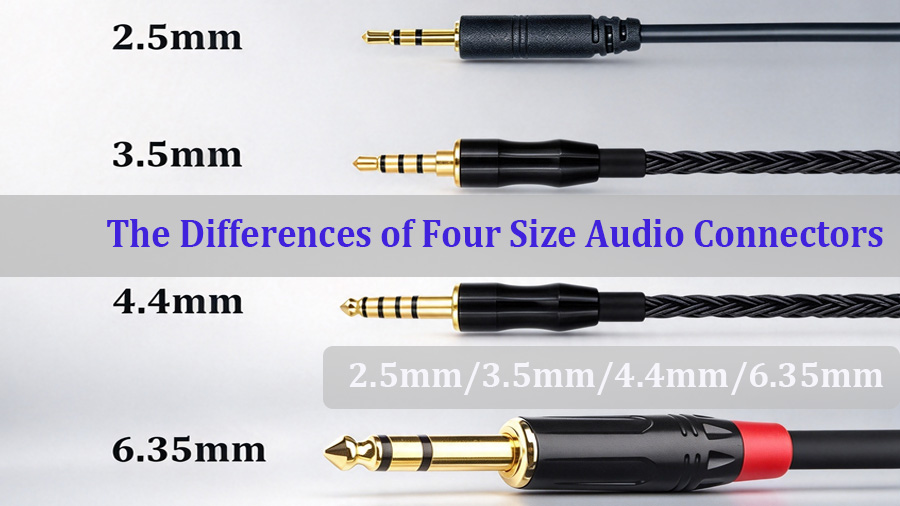
2.5mm, 3.5mm, 4.4mm, 6.35mm Audio Connectors: What Are The Differences & Which Delivers Better Sound Quality?
Related Article