Shielded vs Unshielded M12 Connectors:Real-World EMC Performance Test Comparison

Introduction
In high-EMI industrial automation environments, picking the wrong M12 connector can trigger random PLC misfires, frequent communication packet loss and unexpected equipment downtime.
Shielded M12 connectors deliver powerful anti-interference performance yet come with higher costs. Unshielded alternatives offer attractive pricing but struggle when exposed to high-frequency electromagnetic noise. Many design and procurement engineers face a tough choice between performance and budget. This article walks you through lab-tested EMC data, structural differences, real-world application guidance and common installation pitfalls to support your connector selection.
What Makes Them Different? Core Design of Shielding Construction
The fundamental gap between shielded and unshielded M12 connectors lies in their electromagnetic protection architecture.
Shielded M12 Connectors
- Built-in metal braid or aluminum foil shielding inside the housing; some variants adopt full-metal shells.
- Features 360° grounding contact, establishing low-resistance continuity with equipment enclosures via spring contacts or conductive adhesive.
- Widely deployed for Industrial Ethernet (X-code) and high-frequency sensor links (D-code).
Unshielded M12 Connectors
- Reliance purely on engineering-plastic housings for electrical insulation, with no supplementary shielding layers.
- Cost reduction ranges from 30 % to 50 %. Mostly applied for low-frequency signals or DC power supply circuits (A-code, B-code).
Lab Test Results: Measured EMC Performance Gap
Tests were conducted inside an anechoic chamber following IEC 61000-4-3, measuring radiated interference attenuation across 30 MHz-1 GHz frequency bands.
| Frequency | Shielded Attenuation |
Unshielded Attenuation |
Compliance Threshold (Class B) |
| 100 MHz | 45 dB | 18 dB | ≥30 dB |
| 500 MHz | 38 dB | 9 dB | ≥25 dB |
| 900 MHz | 32 dB | 6 dB | ≥20 dB |
Test takeaways: Shielded M12 connectors fully satisfy industrial EMC requirements below 500 MHz. Unshielded units exceed compliance limits starting above 300 MHz.
For installations near frequency converters and other high-frequency noise sources, shielded hardware is mandatory. Without proper shielding, you risk intermittent PLC triggering and unstable data communication.
Practical Application Selection Guide
When you should use shielded M12 connectors
- Industrial Ethernet (Profinet, EtherCAT) Lab measurements show unshielded M12 connectors raise bit-error rates by 50-fold over Cat5e Gigabit links.
- Servo motor encoder signal lines Pulse signals are extremely vulnerable to harmonic noise from variable-frequency drives. Shielded connectors can suppress signal distortion from 12 % down to below 2 %.
- Medical control cabinets Key signal paths are required to implement shielding protection under EU MDD directives.
Where unshielded M12 connectors are a viable cost-saving option
- 24 V DC power supply for photo-electric sensors
- Low-frequency analogue signals (0-10 V temperature sensors)
- Cost-sensitive temporary mobile equipment such as AGVs
Balancing Performance and Project Budget
- Segmented shielding strategy: For systems dominated by interference below 300 MHz (traditional PLC setups), single-layer shielding constructions can bring around 20 % cost reduction.
- Localized reinforcement: Deploy shielded connectors only close to heavy noise sources such as frequency-converter outputs; use economical unshielded versions for remaining circuit segments.
- Local-manufacturer alternatives: Domestic shielded M12 products can deliver up to 40 % price savings versus imported brands, with measured attenuation differences less than 5 dB.
Final Conclusion
There is no one-size-fits-all M12 connector solution. Spending extra for shielded hardware makes no sense for simple limit sensors on standard stamping presses.
Engineers need to evaluate three dimensions: interference-source frequency, signal type, and project budget. Test data confirms shielded connectors dominate for frequencies above 500 MHz, while unshielded options deliver compelling value for low-frequency scenarios.
Bear in mind: EMC is a system-level engineering challenge. Connectors represent just one piece of the puzzle. Proper grounding and cable routing play equally decisive roles in overall anti-interference results.
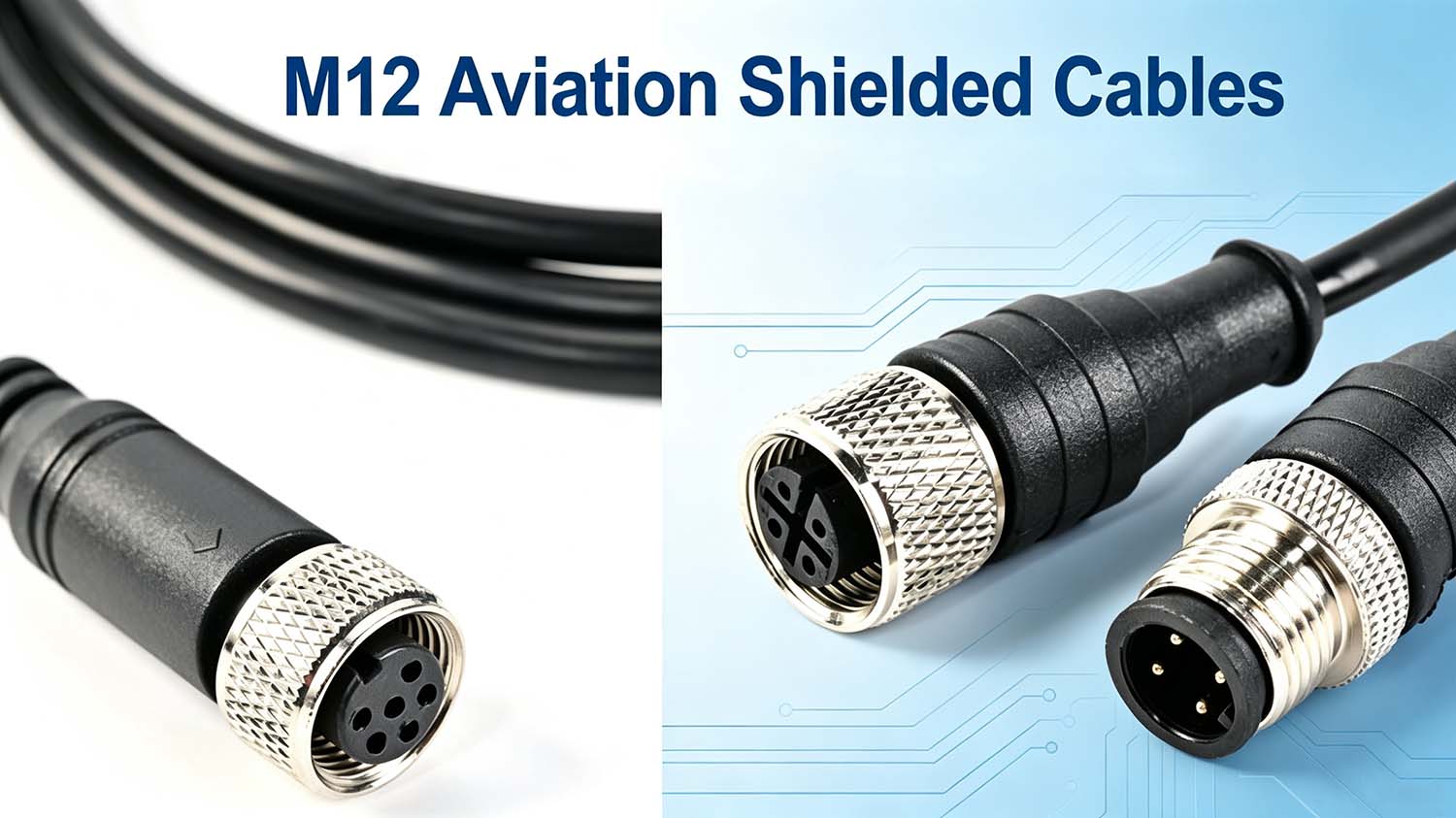
We supply both shielded and unshielded M12 connector assemblies in multiple coding types. Custom housing, cable length and over-molding services are available. Reach out to our technical team for tailored project recommendations and bulk quotations.
Say Goodbye to Blur Lag! 2026 Game Quality Upgrade Strategy: Wires Are The Key
The Difference Between USB Data Cable With E-marker Chip And Without Chip
Related Article