Tinned Copper VS Oxygen-free Copper USB Data Cable: How to Choose?
When buying a USB cable, you might have come across descriptions like "oxygen-free copper conductor" on one side and "tinned copper wire core" on the other. Although both are made of copper, their prices can vary significantly. What exactly is the difference between them? Is it always better to go for the more expensive option? This article will help clarify everything.
What is the difference between the two kinds of copper?
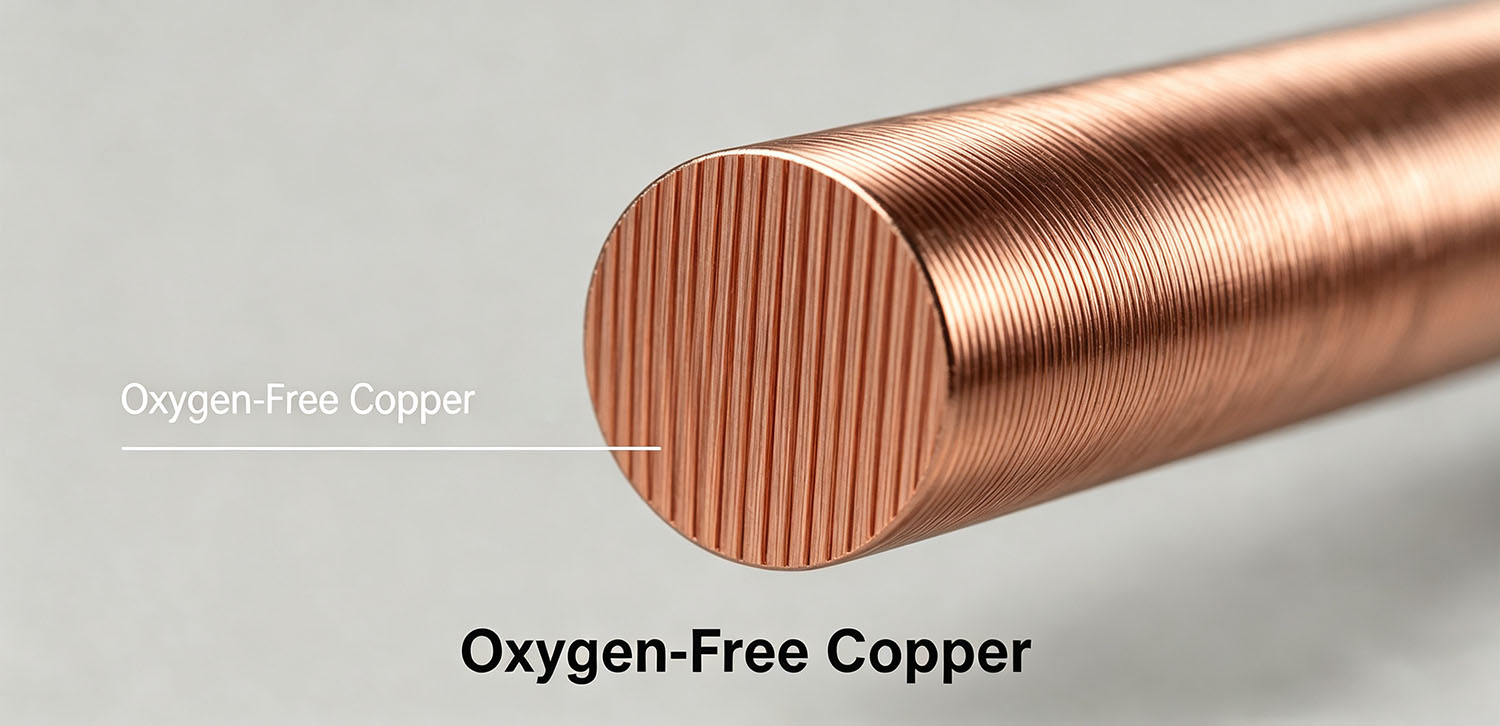
Oxygen-free copper, as the name suggests, is a copper material whose oxygen content is pressed to an extremely low level during the smelting process. The purity is usually above 99.99%, and the oxygen content does not exceed 0.001%. Its biggest feature is "purity"-less impurities, high conductivity, and smooth signal running inside.
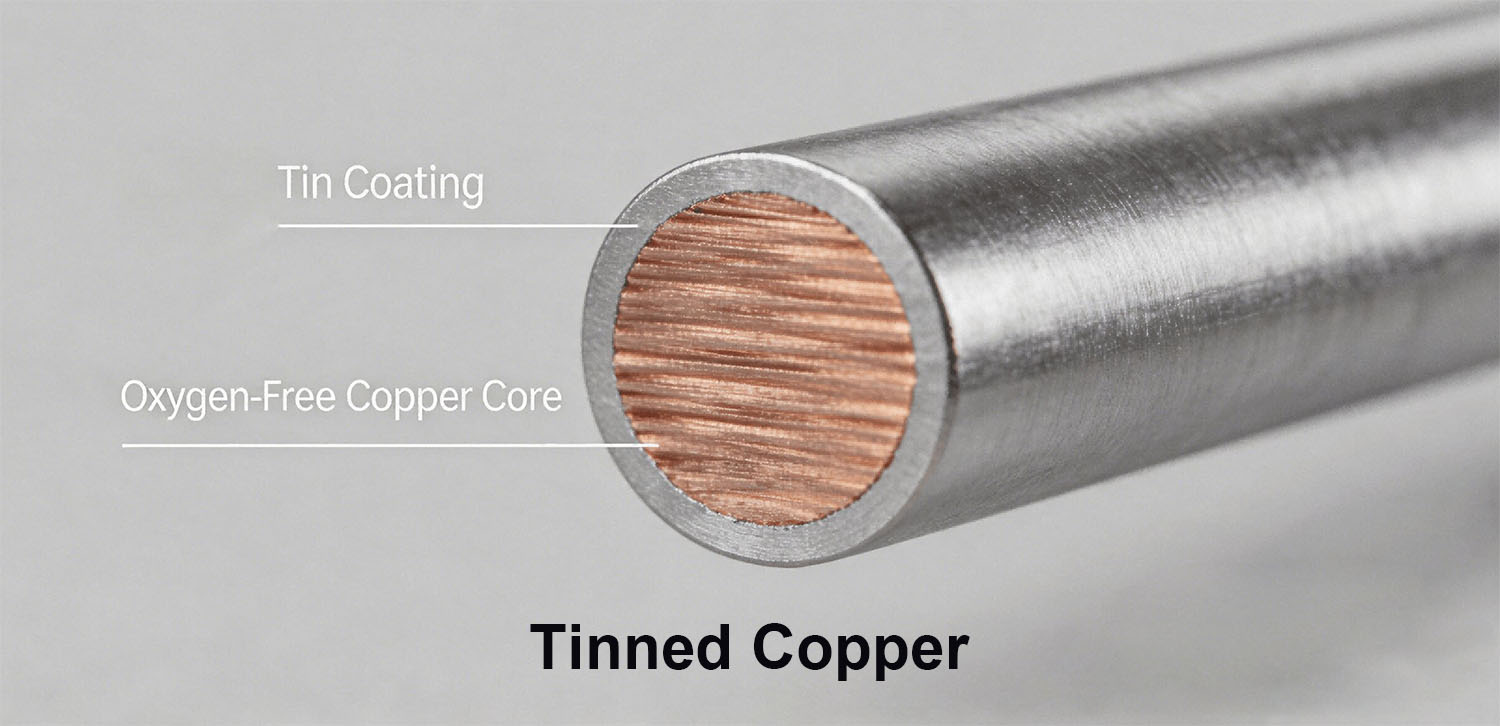
Tinned copper is a thin layer of tin plated on the surface of copper wire. The inner copper core may not be pure oxygen-free copper, but the outer layer of tin changes its character: more corrosion-resistant, better welded, and more resistant.
One pursues the ultimate conductivity, and the other pursues the balance of adaptability. Different directions lead to different applicable scenarios.
Electrical conductivity: Oxygen-free copper leads the way
If you only look at signal transmission, oxygen-free copper is a better solution. Its conductivity can reach 101%~102% IACS, low resistance, and small signal attenuation. In scenarios such as USB 3.0 and above high-speed data transmission, 4K video output, and PD fast charging above 65W, oxygen-free copper can better maintain speed stability.
Because the resistivity of the tin layer on the surface of tinned copper is higher than that of copper, the overall conductive performance will be slightly compromised. However, in daily charging and ordinary data transfer scenarios such as USB 2.0, this difference is almost imperceptible.
Oxidation and Corrosion Resistance: Tinned Copper Wins Back
The shortcoming of oxygen-free copper lies in its "delicacy". The surface of bare copper is easy to oxidize and turn black when it encounters air and water vapor, and the oxide layer will be significantly resistant. Over time, the performance of the wire will drop. This issue becomes more apparent in humid environments.
Tinned copper just makes up for this shortcoming. The tin layer on the surface is like a layer of protective clothing, which isolates air, water vapor and dust, and is resistant to weak acids and alkalis. In industrial or outdoor equipment, the service life of tin-coated copper cables is often much longer than that of oxygen-free copper.
Welding and processing: tin-plated copper is more worry-free
For the production side, tin-plated copper also has a real benefit: easy welding. The melting point of the tin layer is low, the tin is fast, and the performance is good. It can be falsely soldered during batch welding, and the assembly efficiency can be improved. Although oxygen-free copper can also be welded, if it is stored, the peeled copper core is easy to turn black, which will affect the welding instead.
Flexibility and bending life: oxygen-free copper is more durable
Oxygen-free copper has no hard coating, is more flexible, and generally has a bending life about 30% higher than tin-plated copper. If you need a consumer electronics data cable that you plug and unplug every day and carry with you, oxygen-free copper has an advantage in durability. The tin layer of tin-plated copper may fall off locally after repeated bending, and the protective effect will be compromised.
How to choose?
In fact, there is no absolute "better", only "more suitable".
If you pursue high-speed data transmission, high-power fast charging, or the wires need to be plugged and unplugged and carried with you, oxygen-free copper is a more performance-oriented choice.
If your use, there is a risk of corrosion, or the wire rod needs a lot of welding and mass production, the weather resistance and processing convenience of tin-plated copper will be more practical.
In the ordinary indoor USB data cable scene, the actual experience difference between the two is not as big as imagined. Oxygen-free copper is "performance first" and tin-plated copper is "durability first". It is more important to see your own usage scenarios clearly than to blindly pursue a certain material noun.
Need Custom Cables for Your Project?
We produce premium different cables.Customized lengths,connectors and jacket materials are available to match your project requirements.Our engineering team can assist you in selecting the optimal cable for your use case.Contact us for a technical consultation or custom quotation.
How to Protect & Extend the Service Life of Your Gaming Cables
Say Goodbye to Blur Lag! 2026 Game Quality Upgrade Strategy: Wires Are The Key
Related Article